This guide covers the types of light fixtures and effects commonly used in theme parks and the haunt industry, along with a roundup of recommended brands worth exploring.
Whether you’re running a professional attraction or decorating at home, choosing the right lighting makes all the difference. It sets the mood and atmosphere, draws your guests’ attention to exactly where you want it, and can create stunning special effects that bring your story to life.
Tips for how to light your Haunted Attraction or Haunted House
- Try to keep it dark. If you over light your haunt it may kill the atmosphere. The darkness brings the question of what might be lurking in the shadows.
- You can use the light to direct the focus of guests on, for example, decor or props that should be the main focus.
- Use LED lights to minimize fire hazards and to reduce power consumption for the environment and to save on electricity costs.
- With some types of LED lamps, you can also easily digitally change the color and color temperature
- Try to hide the light fixtures from a guest view so that they don’t draw attention or break the illusion. Feel free to hide lamps behind or inside props, in the ceiling, shoot light thru holes in the wall etc.
- If you are on a limited budget, you can use flashlights to illuminate your haunted house.
- You can buy light filters (color filter) and attach them to LED flashlights and LED work lamps. Note! Be sure to attach the filter so that there is some ventilation to the lamp.
- Real candles are not recommended due to the fire hazard. Use fake ones instead.
- In some places you can buy sets of many artificial LED candles that are controlled with a wireless controller. Then it is faster to turn the lights on and off.
- There are also tea lights that are rechargeable which are better for the environment and your wallet. Instead of having a large battery consumption.
- If you are going to light a permanent attraction, such as in a theme park, tea lights that are connected to a battery or regular electricity are recommended.
- If the lamps are to be placed outside in for example a scarezone they must be approved for such use. They should then have an IP rating.
- Many modern LED light strips and smart bulbs give you the ability to control color, effects and intensity wirelessly via their own app on your smartphone.
- If you like electronics, you can connect light fixtures with, for example, a motion sensor and a speaker and have strobe lights or other lighting effects go off simultaneously along with a sound effect to scare guests.
- Use lights with gobos to create dynamic effects and a more organic light. Gobos can also make less interesting walls more eye-catching and more exciting to look at. A gobo is almost the same as a stencil or a template. For example, you can create the effect of light coming through the branches of a tree without having any branches to shine through. Gobos come in many different shapes, including branches, windows, stars, flames, water, skulls, moons and much more. To use gobos, you must either have a profile lamp or a gobo projector.
- You can create interesting shadows by letting the light shine through props or decor. Almost like a gobo.
- If guests will ever have to walk up or down stairs it is important that these are lit. Also make sure that dangerous objects that guests may step into are lit. Or preferably moved out of the way.
- It is often an advantage to have very small lighting fixtures as they are easier to hide. They often also provide enough light for the scene.
- If you have too many light fixtures pointing at the same spot, the light can become flat since there are no shadows. Sometimes a few lights are enough.
- Colored light can affect the color of sets, costumes, makeup, and props. Keep that in mind when choosing colors.
- Use color theory to your advantage. For example, cool colors will recede a bit, and warm colors will pop more. For example, you could use blue to lighten the background, and yellow or orange for props or an animatronic in the foreground. Different colors have also different associations and feelings associated with them. Keep that in mind when choosing your color.
- You can use a product called black wrap (black foil) to change the shape of the light from spotlights and get a more organic shape of the light.
- Avoid dazzling people with the light. This can make it difficult for guests to see all the work and money that has gone into sets, props, effects, costumes, and animatronics.
- Smoke in the air can help create extra atmosphere and make light beams visible in the air.
- Use blacklights (UV-lights) to create glowing effects. It creates a magical and supernatural feel. This can be decorations, props, costumes or makeup that are in fluorescent colors. For example, you can paint eyes on objects such as paintings or dolls so that they appear to have glowing eyes.
- If you don’t have backlights the color filter Rosco R59 makes a decent black light alternative.
Types of lights for your haunted house or Halloween decorations
LED Flood lights
Great for washing bigger areas with light. Such as walls, trees or on a facade. There is usually little control over how you can shape the light.
Strobe light
Blinking lights that create disorientating effects or the illusion of lighting. On many you can manually adjust the speed of the flashing on the fixture.
NOTE – Haunts that include strobe light should warn the guest at the entrance, website and on the tickets if possible. Strobe lights and other lighting effects can trigger epileptic seizures.
Perfect storm
Perfect storm is a system that creates the effect of a lighting and thunderstorm with light that flashes in sync with sound effects.
UV light/Blacklights
Used to create glowing or magical effects when objects in neon colors are exposed under the lights. This can be props, sets, costumes or makeup. UV-lights/blacklight are available in several different types. Both bulbs, fluorescent tubes and in various LED variations.
LED strips
Long strips with led lights. Often used when it’s small space to hide lights. For example, behind props or in moldings.
LED Parcans
Great for covering larger areas of lighting. On the LED versions you can sometimes digitally alter the color on most of them.
Ellipsoidal Lights / Profile Lights
Many of them have something called shutters so you can control where the light should hit more precise in addition to zoom. If you for example only want light on a wall or a painting.
Gobo projectors
Used in combination with gobos to create different patterns, effects or symbols on surfaces or effects through the air in combination with fog.
Lasers
Can for example be used to create the effect of water or a swamp in combination with haze or fog. Sometimes called for a laser swamp. Remember to take some safety precautions and check out if there are some laws or regulations when using lasers where you are located.
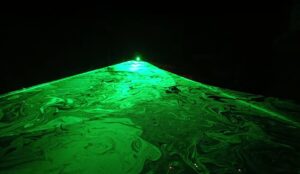
Laser swamp effect made with a laser from CAMEO together with fog from an ADJ fog machine. Some also use blue laser to create the effect of water. TIP – Green laser is usually stronger than other colors which can give extra effect.
Projectors
Used for video mapping or projection effects on props or different surfaces. Can also be used to create patterns similar to a gobo or other effects in fog. AtmosFx is a company that specializes in producing digital decorations for various holidays. With a main focus on Halloween. Kringle Bros also offers various materials that you can project onto to create the illusion of flying ghosts or whatever you want.
Flashlights
Can be used in smaller haunts. Great for home haunters. You can for example fasten some color filters over to change the color of the light. One of the advantages is that they run on batteries and do not require wires. The disadvantage is that the batteries have to be replaced after a while.
LED candles
Used instead of real candles as real candles create a fire hazard. Used to create atmosphere and for decor. You can in some places buy a kit that includes a remote control so you don’t need to turn each candle on and off remotely at the beginning and at the end of a night.
Christmas lights
Sometimes used by home haunters. Can give a cheap and sometimes a more Christmas look. But it has some places too. For example if you have a haunt with a krampus or Christmas theme.
LED diodes
Can be powdered by a battery and used to light up small places and props. Often used in fake candles and to create effects of glowing eyes in props and masks.
Pinspots
Create a very narrow beam. Used to highlight small props or details without getting too much light spill on other stuff. Normally used a lot to light mirror balls.
Moving Heads
Lights that can spin or light in a specific direction. Needs often to be controlled with DMX. Moving Heads can be used in the haunt industry to create effects of search spotlights or for example lighthouses. Or used to create energy in a scene.
Often categorized in two types-
– Wash moving heads
Gives an even wash of light. On some you can control the size of the beam (zoom)
– Spot moving heads
Often equipped with effects such as gobos (patterns)
– Beam moving heads
Create a very narrow beam in the air. Almost like a laser.
Water projector
A light that produces the effect of rippling water. Water projectors are great for pirate themed haunts. Can also be placed in cauldrons to light upwards to cast light in water on walls behind it. On some of them you can choose different colors and the speed of the rotation of the water effect.
Fire and ice
A fixture that creates effects of fire and ice.
Fake flame lights
Creates effects of fire from a piece of fabric that is moving in the air with air from a fan. One example is the flames in the fire scene in the Pirates of the Caribbean ride at Disneyland.
LED Flame Bulb
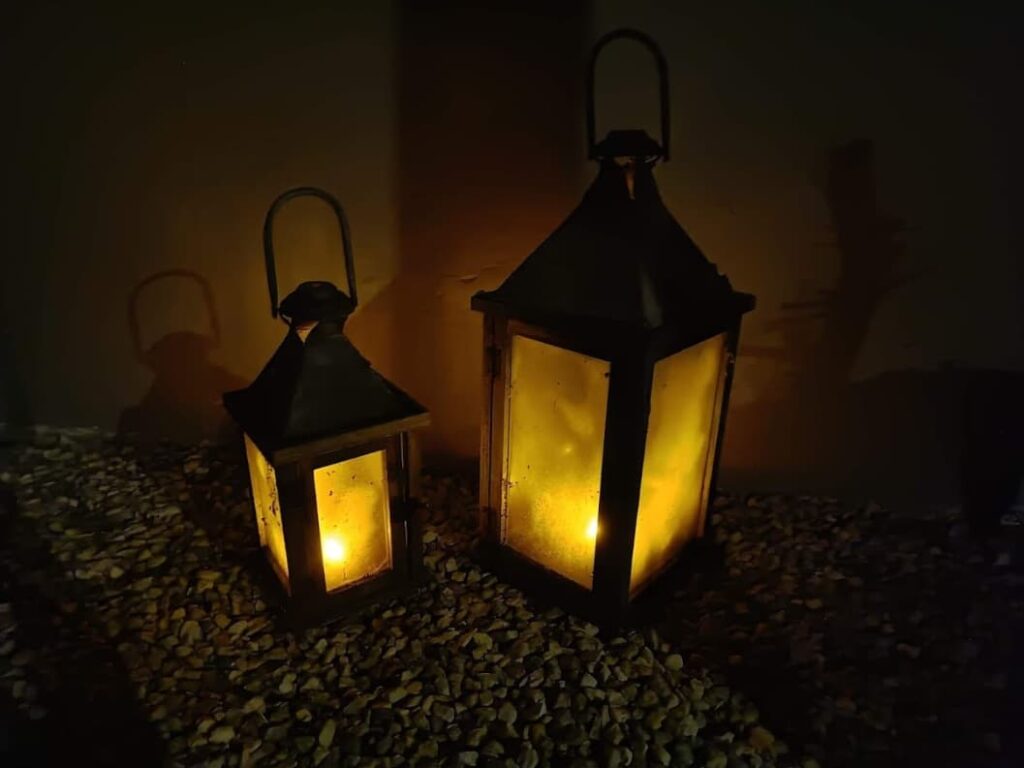
A bulb you can insert into other matching sockets to create an atmospheric flame effect. Great for use in lanterns.
Submersible LED Light
Battery powered small LED lights. Sometimes multicolored, Can be used in pounds, cauldrons, drinks and in for example a lab set to create different types of glowing effects.
Atmosphere effects
All about haze, fog, mist, low fog and snow. These effects help create atmosphere and an extra layer to your attraction.
Note-Smoke, fog and mist effects will in most cases set off the fire alarm. Snow, foam and bubble machines can also create slippery surfaces which can be dangerous.
Haze machines
A thin tape of fog. A hazer often stands on the whole time. Used a lot at concerts to make light beams in the air visible.
Fog machine
Creates thicker clouds of white fog. Often controlled manually or with a timer.
Low fog machines
Thicker type of fog that hangs on the ground. Gives often best effect indoors. Most of these machines require either dry ice or normal ice cubes in addition to a regular fog juice to work. There are also low fog machines that require distilled water in addition to fog juice. As well as more expensive machines that use gas, but they are not often used for Halloween and in haunted attractions.
Snow machines
Create effects of falling snow in the air. Together with a slowly flashing strobe light in a dark room, you can also create the effect of insects in the air with a snow machine.
Mist makers
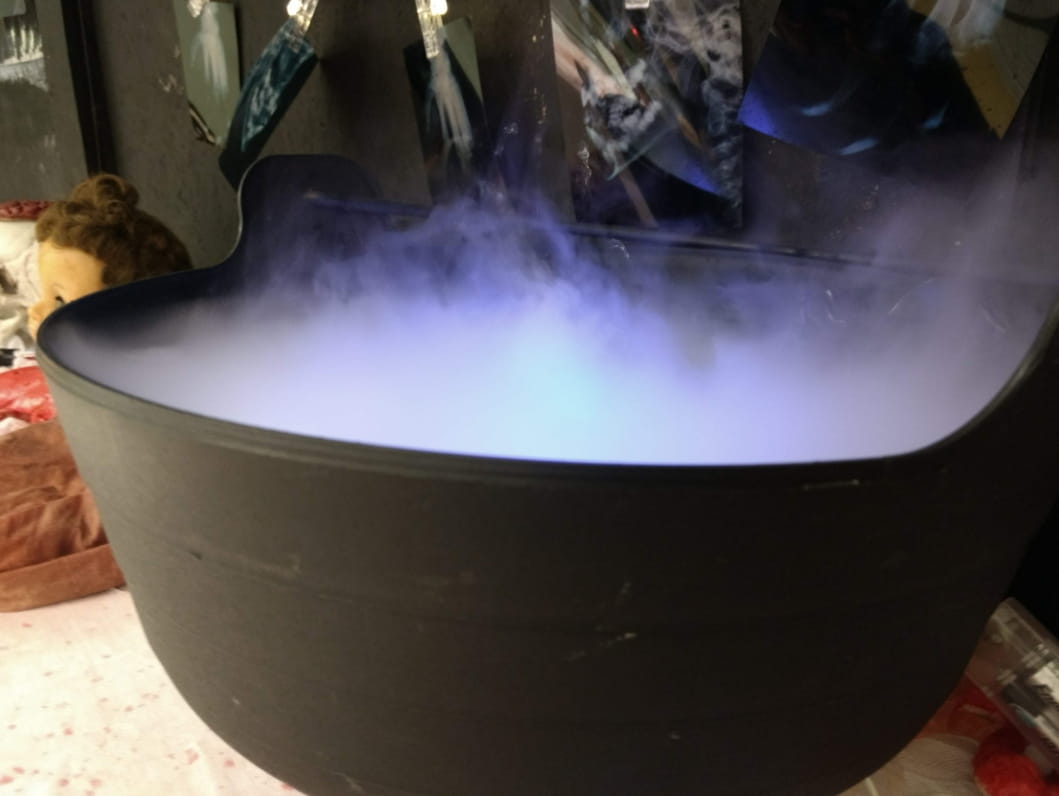
Often referred to as pound misters. Placed in a cauldron, pound or another prop filled with water. Great for use in witches’ cauldrons. Some of them have also LED lights in them. Which creates an extra effect and almost creates the illusionThe container you use for mist makers must occasionally be filled with more water since the amount of water can decrease over time. that the smoke has color or glows. These are also suitable for laboratory scenes. The container you use for mist makers must occasionally be filled with more water since the amount of water can decrease over time.
Bubble machines
A festive and magical effect that is a nice diversion. There are also machines that make fog bubbles, which are soap bubbles filled with smoke for extra effect.
Wind Machines
Great for creating a cold atmosphere or for making light decor move a little in the air from the fan. Can also be used to make smoke, bubbles or haze move.
Fog juice scent
Mix with fog fluid to create fog that smells. Available in many types. How about, for example, tutti frutti or cotton candy smell if you have a clown themed attraction?
Witch brands of light equipment should I choose for my haunted house or Halloween attraction?
Here are some well known and recommended brands. It is recommended to check reviews before you go shopping. As well as looking at details such as the functions the fixtures have.
- American DJ (ADJ)
- Eurolite
- Chauvet DJ
- SHEDS
- Beetopper
- Blizzard Lighting
- Rosco (color filters)
- LEE filters
- ColorKey
- Ned’s LEDs
Recommended reading: Lighting Design and Lighting Techniques
If you want to learn more about light design or stage lighting I can recommend this post Books – Lighting Design and Projections. There you can also find some books on lighting design that also covers some information relevant to haunted attractions and events. If you want to learn more about how to create your own haunted house, Halloween decor or want information on how to run an Halloween attraction or a haunted house, I can recommend the books listed on this post: Books – Halloween and Haunted Houses
Haunt Lighting – Video Tutorials
Here are a few free video tutorials to help you explore haunt lighting further, with demonstrations, examples, and step-by-step builds.
How To – Haunt Lighting 101
In this beginner-friendly guide to haunt lighting from VanOaks Props, you’ll learn how to dramatically improve your Halloween display without spending a fortune. The video covers two key techniques using a small number of fixtures:
Flood Lighting Basics – Discover how to use Bluetooth-enabled RGB LED flood lights to uplight tombstones and props from low angles, creating dramatic shadows, texture, and depth. You’ll also learn why brightness control matters, and how too much or too little light can make or break the atmosphere of your display.
Accent & Motivated Lighting – Learn how LED candles combined with hidden spotlights can add a warm, realistic glow to your scene through a technique called “motivated lighting” – making extra light sources feel natural and believable within the display.
By the end of the video, you’ll have practical tips on positioning, brightness, color, and layering lights to create a professional-looking haunt on a budget.
Improve Your Haunt Lighting with Gobos!
In this creative DIY guide, you’ll learn how to use lighting gobos to add dramatic texture and atmosphere to your Halloween haunt on a budget. Gobos – short for “go-betweens”, are silhouettes or shapes placed in front of a light source to cast interesting patterns and shadows onto your scene.
What Gobos Are & Why They Work – Understand the basic concept behind gobos and see examples of how simply placing a design in front of a light can completely transform the character and mood of a display.
DIY Gobo Builds – See how the creator designed two 3D-printed gobo housings built around small LED bulbs and PVC pipe, making professional-style gobo lighting achievable for a fraction of the cost. You’ll also learn how to make custom gobo inserts out of poster board to suit any lighting need.
Mounting & Assembly Tips – Learn a simple method for creating a ground stake from PVC pipe, and get practical advice on holding everything together using gaffer’s tape, CA glue, or epoxy.
No 3D Printer? No Problem – Discover that you don’t need special equipment to try this technique – plywood, plastic, or even tin foil placed in front of a light source can produce surprisingly effective results.
By the end of the video, you’ll have a new, affordable tool in your haunter’s toolkit for elevating your lighting from flat and plain to textured and atmospheric.
10 DIY Halloween Lighting Upgrades!
This marathon compilation brings together 10 of VanOaks Props best Halloween lighting tips and builds, covering everything from basic setup to surprisingly advanced DIY electronics. Whether you’re a beginner looking to improve your cemetery display or an experienced haunter ready to tackle a new challenge, there’s something here for every skill level.
The video walks through foundational techniques like flood lighting placement, brightness control, and motivated lighting using LED candles, then moves into more hands-on builds including a weatherproof plug-and-play 12V lighting system, a rotating motor effect that creates moody, shifting light patterns, and a DIY gobo system for adding texture and atmosphere to any scene.
More ambitious projects include wiring Jack-o’-lanterns into a low-voltage lighting system to ditch dead batteries for good, upgrading a vintage lantern with an Arduino-controlled NeoPixel ring for a realistic candle flicker effect, crafting glowing PVC Halloween candles using schedule 30 pipe and hot glue wax drips, and even building a sound-reactive lightning effect box from a budget light organ kit.
Across all ten segments, the focus stays on practical, affordable solutions that haunters of any experience level can tackle at home.
Haunt Lighting – Tombstone Tech
This approachable overview breaks down the four core purposes of haunt lighting – illumination, directing attention, creating effects, and setting mood – and shows how understanding each one can dramatically improve any Halloween display, big or small.
The video explores how light and shadow can be used strategically to hide things you don’t want seen, guide your audience’s eyes to the right props at the right moments, and create atmospheric effects like lightning, fire, or an eerie fog-and-laser vortex. There’s also a solid breakdown of how color temperature and light angle affect mood, explaining why cool blues feel unsettling, warm colors feel threatening, and light from below instinctively reads as unnatural and creepy.
The highlight of the video is an introduction to the “cucalorus” – a simple object placed between a light source and a surface to cast interesting shadows. Using everyday items like a baby gate or a bundle of cables, the video demonstrates how this one cheap trick can make a large, bare area of your haunt look richly decorated with almost no effort.
Post written by light designer and makeup FX artist Sander Skarås Pedersen.
Photos used with permission from Halloweensminke.no and Spfx.no